America’s manufacturing future depends on the people who know how to build it.
Join industry, workforce, education, and defense leaders October 20–21 in Galveston, Texas to strengthen America’s skilled workforce and industrial capability.
Hear what’s working. Build partnerships. Take home strategies you can use.
How Minnesota students are getting CNC machining training – without schools owning the equipment
Summary: Through ACE hub St. Cloud State University’s Technology, Engineering & Careers Network, Minnesota high schools can borrow CNC machines and provide students with hands-on machining training. Combined with America’s Cutting Edge training, the program is helping students explore manufacturing careers and build job-ready skills – with local industry taking notice.
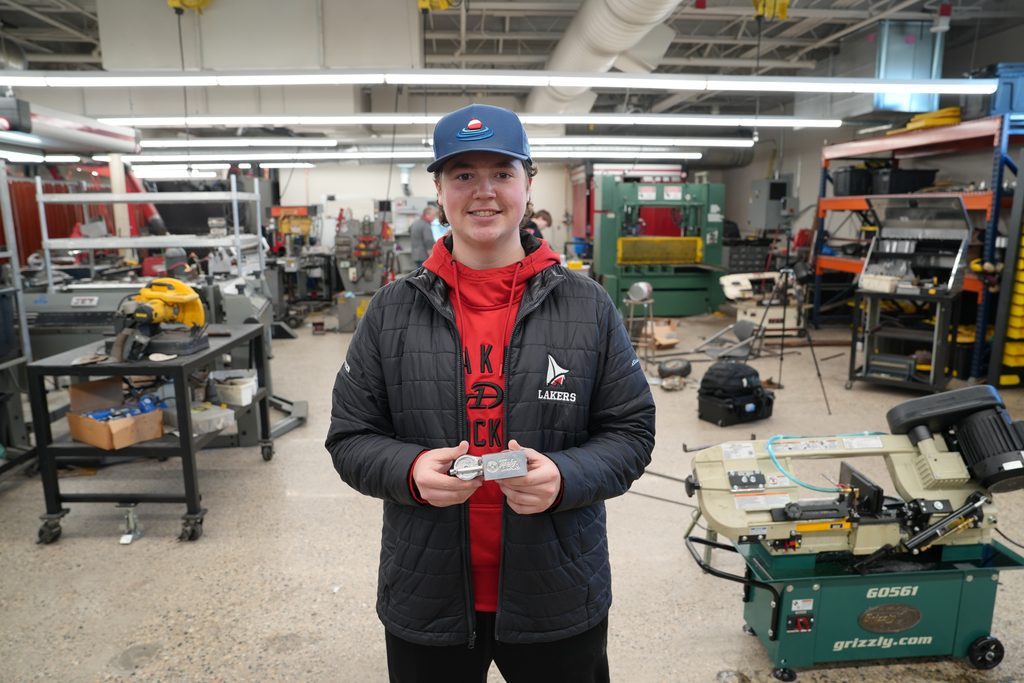
Cade Otten holds an ACE air engine.
Aug. 21, 2026 (Detroit Lakes, Minn.) – Cade Otten still has two years of high school ahead of him, but he’s already thinking about life after graduation.
His first choice? Professional sports.
His backup plan? A career in CNC machining.
Thanks to hands-on manufacturing training available through his school, the Detroit Lakes High School junior is ready – no matter where life takes him.
“Getting CNC machining knowledge in high school before going into the workforce puts me where I need to be instead of having to learn things later,” he said.
Bringing CNC machining training to schools that can’t afford the equipment
Many schools want to expose students to advanced manufacturing careers but face a major obstacle: equipment costs.
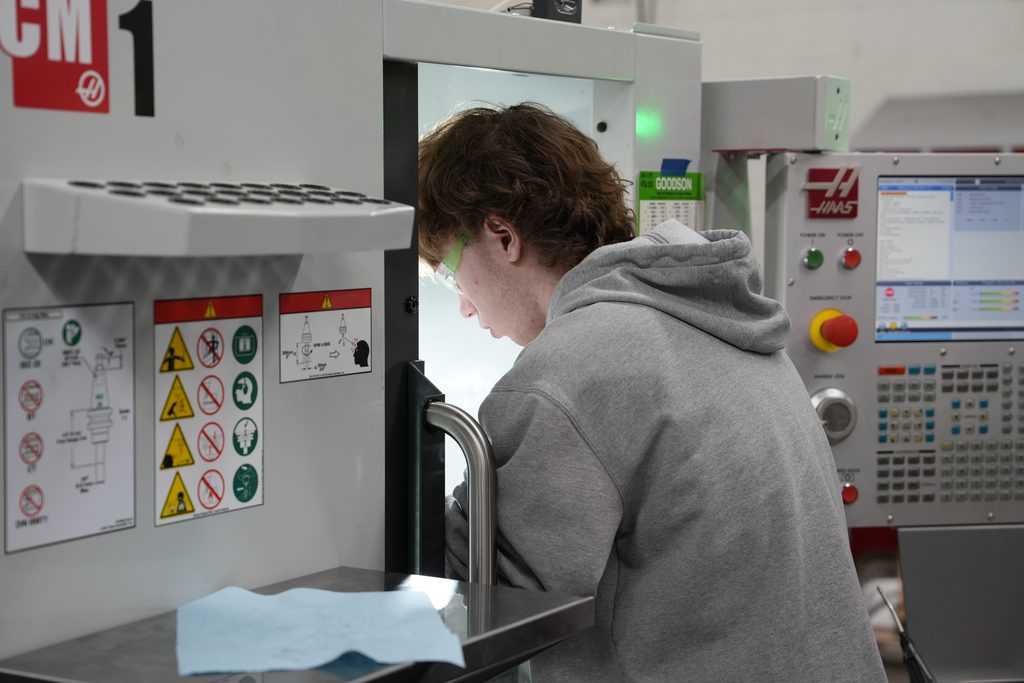
Students at Belle Plaine High School are using one of St. Cloud State University’s three-axis CNC mills to do ACE training.
Through the program, participating schools like Detroit Lakes High are loaned manufacturing equipment on a rotating basis.
For high schools running ACE training, that includes a three-axis CNC mill that allows students to get hands-on machining experience.
The model helps schools provide manufacturing exposure without purchasing the equipment themselves.
“I’m willing to bet that we’ll have kids who will go on to pursue a career in machining because of this program,” said Dr. Ryan Laager, superintendent of Belle Plaine Public Schools in Belle Plaine, Minnesota. “A district like ours wouldn’t be able to purchase a machine like this. Our kids wouldn’t have been exposed to this without this program.”
Connecting students with manufacturing careers
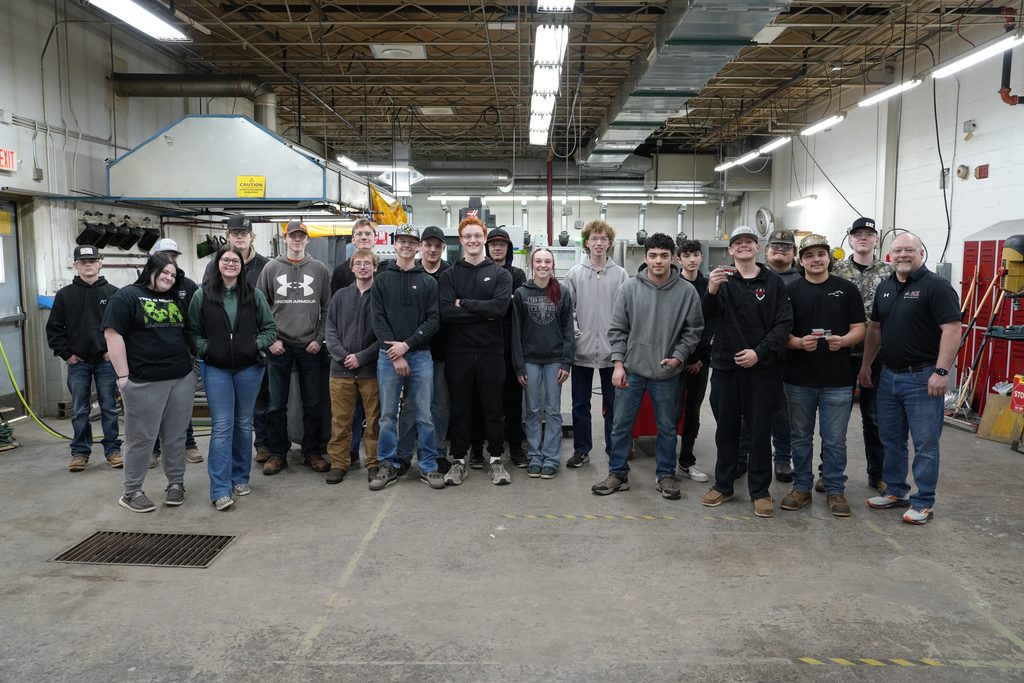
Detroit Lakes High School has participated in the TEC Network and ACE training for a couple years, giving students opportunities to learn computer-aided manufacturing and work with CNC equipment.
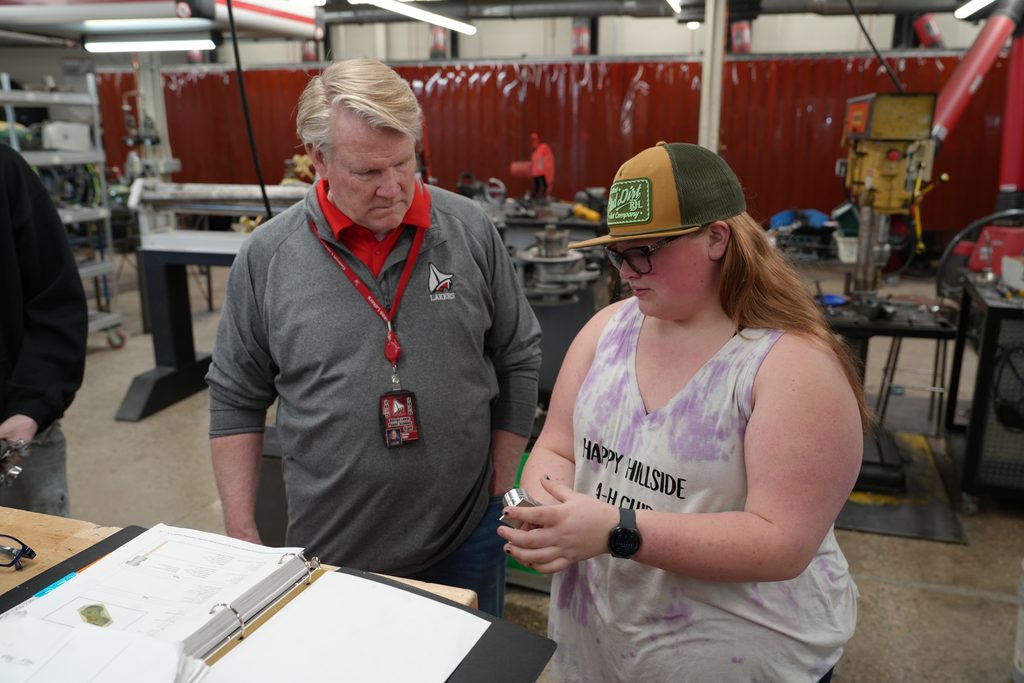
Charles Honke (left) works with a student during ACE training.
According to Charles Honke, STEM teacher and ACE instructor at the school, local manufacturers have noticed.
“The manufacturing community in Detroit Lakes has taken an interest in this,” he said. “They come and check out the students to see if they could be potential employees.”
Honke says several students have gone on to work with local industry, creating valuable connections between the school and them.
“The manufacturers really like the skills they’re seeing,” he said. “Those skills are wanted.”
Nick Rowland, industrial technology teacher and ACE instructor at Bemidji High School in Bemidji, Minnesota, has seen similar results.
He says some students are entering the workforce immediately after graduation because of the manufacturing skills they’ve developed through training.
“That’s powerful,” he said. “They’re getting what they need to support themselves for free. They don’t have debt. They’re ready to go.”
Why early exposure to advanced manufacturing matters
Without students having opportunities to explore manufacturing careers, they may never know if one is right for them.
A Belle Plaine High School student uses a CNC machine loaned by St. Cloud State University for ACE training.
Right now, the timing is critical.
As of June, manufacturing has 481,000 open roles, according to the Federal Reserve Bank of St. Louis.
And the U.S. Bureau of Labor Statistics forecasts a need for 34,200 machinists annually through 2034. About half of all manufacturing roles are forecasted to experience growth in that same time.
All of that to say: exposure is vital.
“Students can find out in high school that this might be something they want to pursue,” said Mindy Chevalier, principal of Belle Plaine High School.
That’s certainly been the case for Cade, the Detroit Lakes High School junior.
The hands-on training he’s gotten through ACE and St. Cloud’s equipment has prepared him for a future he might not otherwise have considered.
“As we’ve gone on [through ACE training], I’ve gotten more comfortable,” he said. “If I go into machining in the future, I’ll know what to do.”
We use cookies to ensure that we give you the best experience on our website. If you continue to use this site we will assume that you are happy with it.