
A popular bootcamp is returning to Oak Ridge High School this spring thanks to a recent partnership between Roane State Community College and the Institute for Advanced Composites Manufacturing Innovation® (IACMI).
Roane State announced its workforce training partnership with IACMI last year, making the college just the third location in the State of Tennessee to offer specialized no-cost machine tool training opportunities through America’s Cutting Edge (ACE).
ACE is a joint Department of Defense (DoD) and Department of Energy (DOE) effort launched in 2020 to reestablish American leadership in the machine tool industry through transformative thinking, technology innovation and workforce development.
Roane State and Oak Ridge High School educators joined specialized instructors over fall break for a CNC Bootcamp at the high school. The session welcomed the youngest ever ACE training participant, Oak Ridge student Harry Shanafield, who was 13 when the camp took place.
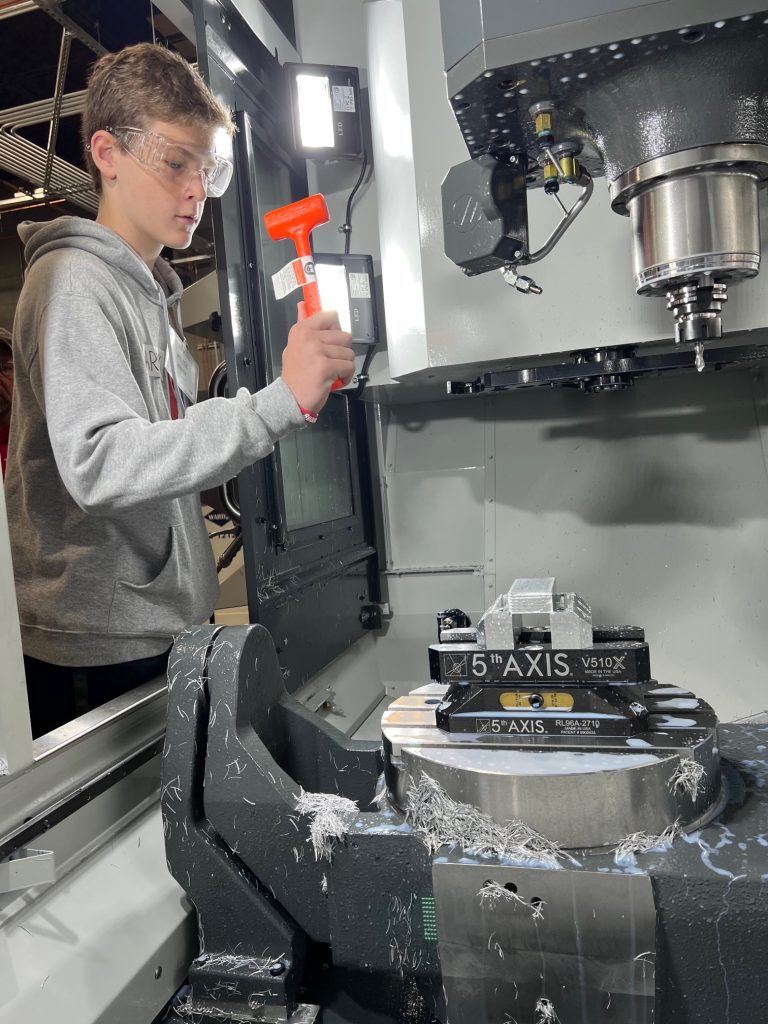
“That’s pretty cool, but I don’t think it matters because I can learn just like everyone else,” he told camp organizers when learning about the milestone. Shanafield used Fusion 360 design software during the camp and machined his first part with a 5-axis machine.
Many of the camp’s participants plan on pursuing careers in fields such as electrical engineering, machining, robotics, and aerospace.
“You’re always going to have a job. All the jobs are in CNC now because they’re so efficient,” said camp participant Eric Ellis, 19. “Everything you will see out there, a machinist has touched or designed, and I think that’s really cool.”
“Free programs like the CNC Bootcamp with IACMI and ACE are a critical component of our plan to meet the needs of the manufacturing workforce in our region,” said Teresa Duncan, Roane State’s vice president for workforce and community development. “As those needs grow, we will continue to invest in quality training and education opportunities for our students of all ages and skill levels.”
The CNC Bootcamp will return this spring at Oak Ridge High School with exact dates to be announced soon. Additional locations will be added as the program expands. Registration information will be shared online. Visit roanestate.edu/ACE for the latest information.
If you have a group that would like to participate as a cohort, please contact camp coordinator Evan Lohrey at lohreye@roanestate.edu. More information about the programs is available online at AmericasCuttingEdge.org.
About Roane State Community College
Roane State is a two-year college providing transfer programs, career-preparation programs and continuing education. Founded in 1971, the college has locations in Roane, Campbell, Cumberland, Fentress, Knox, Loudon, Morgan, and Scott counties as well as a branch campus in Oak Ridge. For more information, visit roanestate.edu or call (865) 882-4554. Remember, eligible adults can now attend Roane State tuition-free with the new Reconnect grant. Learn more at roanestate.edu/reconnect.
About IACMI – The Composites Institute
IACMI – The Composites Institute is a 130-plus member community of industry, universities, national laboratories, and federal, state, and local government agencies working together to accelerate advanced composites design, manufacturing, technical innovation, and workforce solutions to enable a cleaner and more sustainable, more secure, and more competitive U.S. economy. IACMI is managed by the Collaborative Composite Solutions Corporation (CCS), a not-for-profit organization established by The University of Tennessee Research Foundation. A Manufacturing USA institute, IACMI is supported by the U.S. Department of Energy’s Advanced Manufacturing Office, as well as key state and industry partners.
America’s Cutting Edge provides free machine tool training aimed at revitalizing American manufacturing
KNOXVILLE, Tenn. (January 11, 2023) – The National Tooling and Machining Association (NTMA) announced the endorsement today of America’s Cutting Edge (ACE), a free machine tool training program designed to engage the next generation of machinists and create talent pipelines for the precision manufacturing industry in the U.S. Supported by U.S. Department of Defense (DoD), ACE is led by the Institute for Advanced Composites Manufacturing Innovation (IACMI), a national Manufacturing USA institute that collaborates with industry, academia and government to solve America’s manufacturing challenges.
“As a leading national trade association for the U.S. precision manufacturing industry , NTMA has been a consistent champion of and resource for workforce skills training,” said NTMA President Roger Atkins. “NTMA assists our members by identifying and recommending high-caliber programs that can help them foster and grow the talent in their facilities. America’s Cutting Edge, like our NTMA-U program, is an accessible platform to help manufacturers and educational institutions build an empowered workforce. Coming out of the pandemic, the U.S. manufacturing sector is strong. It is more important than ever to focus on building a workforce for today and the future.”
An active member of NTMA, IACMI values NTMA’s recognition of ACE as a solution to help train CNC machine tool professionals and rebuild U.S. capabilities in this area. Through ACE, IACMI is working directly with DoD’s Industrial Base Analysis and Sustainment (IBAS) Program to scale up machine tool training centers across the U.S. to help restore the prominence of the U.S. machine tools sector. By investing in programs like ACE, IBAS strives to keep the U.S. industrial base at the front of strategic competitiveness by fielding new technologies and systems with the right-sized and trained workforce.
The ACE training focuses on Computer Numerical Control (CNC) machining fundamentals but is geared towards anyone interested in manufacturing, from high school students to experienced machinists looking to expand their skills. Both the six-hour online course and the 32-hour in-person training require no prior experience and are offered at no cost. More than 3,300 people from all 50 states are engaged in the online training that began in December 2020, and in-person training is expanding from Tennessee to machine tool training centers in North Carolina, Texas, West Virginia, and Florida. Machining and machine tools are at the foundation of America’s manufacturing capability and its global competitiveness.
According to Lucinda Curry, IACMI’s national workforce manager, NTMA’s endorsement of ACE is very important. “NTMA is a leader in utilizing new technologies, promoting common business interests, and providing education and training for their members. Their endorsement will demonstrate the value of ACE training to enhance school programs, apprenticeships, and help recruit more workers to the machining industry.”
“This is a critical and strategic collaboration.”
Dr. Tony Schmitz
Dr. Tony Schmitz, mechanical engineering professor at the University of Tennessee, Knoxville and joint faculty at Oak Ridge National Laboratory, agrees. He developed the ACE curriculum and is thrilled to have NTMA’s support. “The ACE mission is to deploy training that advances the capabilities of U.S. machining through its workforce. Our intended audience is largely composed of NTMA members. This is a critical and strategic collaboration.”
About IACMI and ACE
IACMI is a 130-plus member community of industry, universities, national laboratories and federal, state and local government agencies working together to benefit the nation’s energy, manufacturing and economic security. IACMI is one of 16 institutes that make up Manufacturing USA, a national network connecting people, ideas and technology to secure U.S. global leadership in advanced manufacturing. This network seeks to build the national manufacturing workforce, advance technology, create new products and reduce the costs and risks to individual companies associated with these activities. IACMI is supported by the U.S. Department of Energy’s Advanced Manufacturing Office, as well as key state and industry partners. ACE is supported by the DoD’s office of Innovation Capability and Modernization through its IBAS Program. ACE brings together the scientific expertise of the Department of Energy’s Oak Ridge National Laboratory (ORNL), advanced training tools and techniques developed at the University of Tennessee, Knoxville (UT), and the workforce development leadership of IACMI.
America’s Cutting Edge CNC Program Aims to Revitalize American Manufacturing
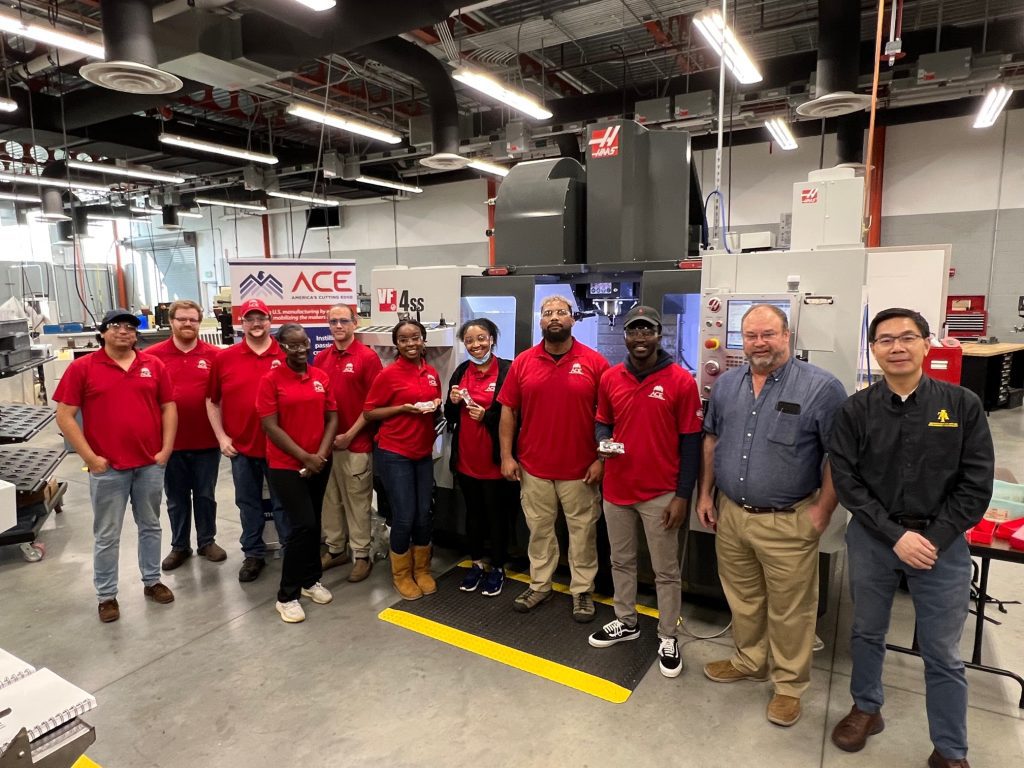
(December 13, 2022) – North Carolina Agricultural and Technical State University (N.C. A&T) and Alamance Community College (ACC) have kicked off the first Computer Numerical Control (CNC) machining training of its kind in North Carolina. America’s Cutting Edge (ACE), a U.S. Department of Defense program designed to reestablish American leadership in the machine tool industry, provides online and in-person training – all at no cost.
“Industry demand for machine tool operators, engineers, designers, and entrepreneurs far outpaces our manufacturing workforce supply in the U.S.,” said Dr. Aixi Zhou, Chair and Professor in the Department of Applied Engineering Technology at N.C. A&T. “At North Carolina A&T, we are leveraging this opportunity with America’s Cutting Edge to better serve the Piedmont Triad region.”
The ACE program is comprised of two parts. The first is an online requirement that covers an introduction to CNC and 3D modeling using Fusion 360 and virtual machining applications. Upon completion, students become qualified to advance to a week-long, hands-on lab training “bootcamp.” Bootcamps provide opportunities for eligible students to learn in a high-intensity environment through hands-on, in-person training.
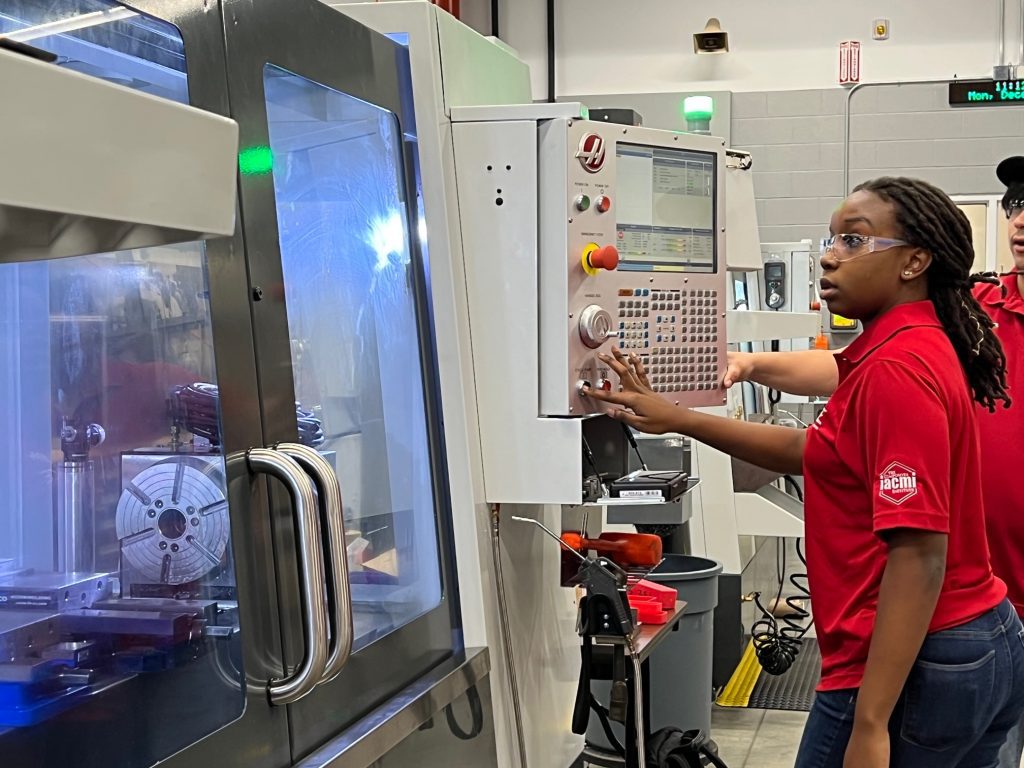
Working with education partner N.C. A&T as an ACE regional machine tools innovation and workforce development hub, ACC has plans to make its new CNC program a model for the state.
“The ACE program asked us to be part of their extended team and we were the first community college in North Carolina to accept the invitation and be approved,” said James Adkins, Department Head of ACC’s Computer Integrated Machining (CIM) program. “CIM is a precision machining operation where students learn life skills that allow them to work anywhere in the world. This is especially true for female students who are in high demand in the industry.”
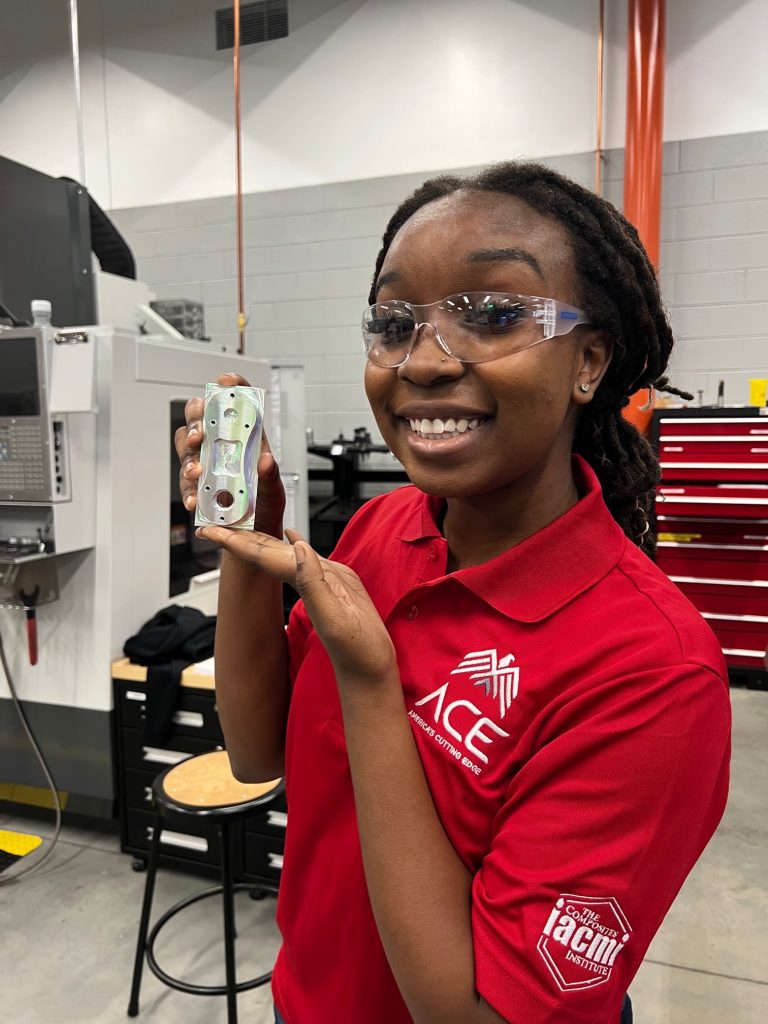
ACE also hopes to attract another traditionally underserved community in manufacturing, while connecting with industry. “As the country’s largest historically black university (HBCU) and leading producer of African American engineers, North Carolina A&T is uniquely positioned to increase diversity in manufacturing, particularly machining,” said Dr. Zhou. “The Piedmont Triad region plays an important role in some niche manufacturing industries, such as aerospace, automotive, bio-manufacturing, and furniture.”
When asked about her career plans, bootcamp participant Anaya Maxwell answered definitively, “THIS, exactly this. Today was my first experience working on a CNC machine, but last summer I took a summer camp in 3D printing and loved that too.” From Houston, Texas, Anaya is a sophomore at N.C. A&T pursuing a degree in Applied Engineering Technology. “I’d like to own my own business that combines additive and subtractive and work with other black women, but I don’t know where I’m going with that yet.”
ACE is supported by the defense department’s Industrial Base Analysis and Sustainment (IBAS) Program. ACE brings together the scientific expertise of Oak Ridge National Laboratory (ORNL), advanced training tools and techniques developed by University of Tennessee, Knoxville Professor Tony Schmitz and the workforce development leadership of the Institute for Advanced Composites Manufacturing InnovationÒ (IACMI). More than 3,100 people from all 50 states are engaged in the online training that began in December 2020, and in-person training is expanding from Tennessee to hubs in North Carolina, Texas, West Virginia, and Florida. Machining and machine tools are at the foundation of America’s manufacturing capability and its global competitiveness.
Register for free at AmericasCuttingEdge.org.
“I’m 34 years old, this is my first job in manufacturing, and I’m really excited about my future!” said Marcus Beamon of Denton, Texas. America’s Cutting Edge (ACE) is pleased to celebrate Marcus as the 3000th registrant for its free online machine training as a pathway toward a more fulfilling and prosperous career in manufacturing.
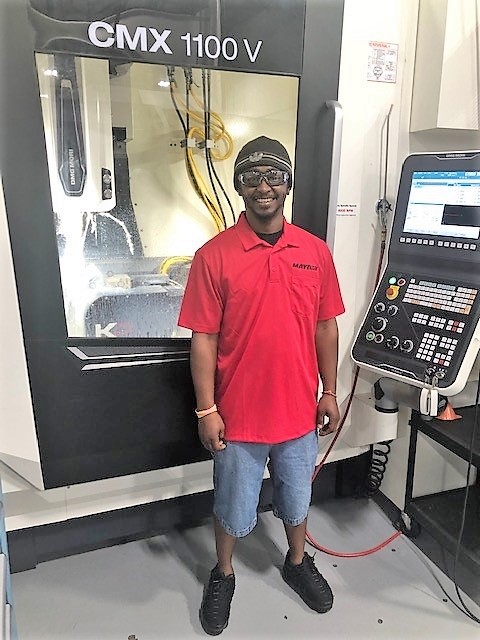
“I was a painter for a long time, and you never knew when your next job would be. Manufacturing offers constant work, and I like that,” said Marcus. He joined Mayday Manufacturing in April, doing deburring and a form of powder coating for about $15 an hour. Then, he heard about CNC machining. Mayday has five levels of machinists who make anywhere from $17 to more than $30 per hour. “I’ve liked it here so far, but I’m ready for new challenges,” added Marcus.
Mayday Manufacturing is a leading build-to-print manufacturer of aerospace bushings, pins, sleeves, and turned metal parts. For more than 50 years, Mayday has produced over 130,000 unique aircraft components, and their parts have been in nearly every military and commercial aircraft in the western world. Mayday is growing steadily to meet increasing customer demand, and the need to attract and train new talent is key to continued success.
Craig Barhorst, Operations Manager for Mayday, saw ACE as a tool they could use to help their employees expand their skills and grow in their careers. “Marcus is the perfect example of someone who shows a desire to learn and is dedicated to a new start,” Craig said. “We often target recent high school graduates, but Marcus is a whole other demographic of people changing professions that we can work to attract. This is our first experience with the ACE training, but we’re enthusiastic about the possibilities.”
When Marcus’ supervisor mentioned the opportunity, he didn’t hesitate. “Sign me up!”
Incredible Growth of ACE
ACE is a national initiative to restore the prominence of the U.S. machine tools sector. The ACE training focuses on Computer Numerical Control (CNC) machining fundamentals but is geared towards anyone interested in manufacturing. Both the 6-hour online course and the 32-hour in-person training require no prior experience and are offered at no cost.
Since launching in December 2020, ACE online has attracted a diverse group of 3,000 registrants from all 50 states:
- 69% are from Education
- 31% are from Industry
- 55% have no previous CNC experience
- 54% attend 4-year colleges
- 7% attend community colleges or trade schools
- 9% attend high schools
“Whoever you are, wherever you are, there is a place for you in manufacturing, and ACE is a pathway for realizing your dreams,” said Adele Ratcliff, Director of the Department of Defense’s Industrial Base Analysis and Sustainment (IBAS) program, the core funding supporter for ACE. “This training can be a pathway to prosperity for you and your community while contributing to the economic security of our country.”
ACE online has been most popular in Tennessee and North Carolina but is quickly gaining ground in the Lone Star State. Texas A&M Engineering Experiment Station (TEES) and the University of North Texas (UNT) are two of the newest machine tool training centers, the model being used to scale up the ACE program nationwide. Together they are reaching out to a wide variety of populations to offer the ACE training and are getting great feedback from the defense manufacturing sector. Mayday Manufacturing and Safran are two defense contractors that are sending numerous employees to pursue both the online and in-person training. Texas is a particularly critical state because it is number one for defense contract spending at $71.2 billion annually and accounts for 14% of total U.S. defense spending.
Hector Siller Carrillo, who leads the UNT ACE training, explains, “Our primary focus is workforce development. Dallas-Fort Worth is the fourth largest metropolitan area in the country, with more than 7 million residents and growing. We know industries are looking for talent, and ACE is an excellent training tool to cultivate curiosity.”
“This is how we bring manufacturing back to America — through collaboration and concentrated efforts to expose as many people as possible to the world of manufacturing,” said Joannie Harmon, Director of Workforce Development at the Institute for Advanced Composites Manufacturing Innovation (IACMI). Through an agreement with DoD’s IBAS, IACMI is managing the scale-up of ACE, using the curriculum developed by Dr. Tony Schmitz, professor at the University of Tennessee, Knoxville and Joint Faculty at Oak Ridge National Laboratory. “Our partners are deploying a national strategy at a local level, which in turn impacts their economy, community, and individual lives,” added Joannie.
What’s Next for Marcus?
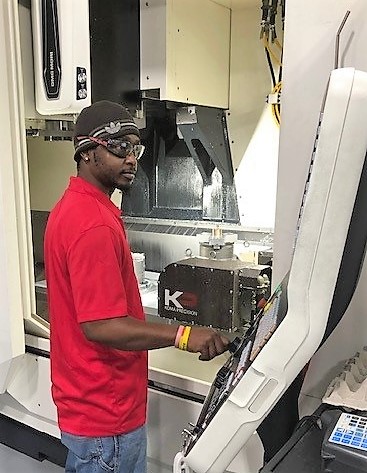
The next step for Marcus and several of his coworkers will be the in-person ACE bootcamp offered a few miles down the road at UNT. Having that facility so close to Mayday Manufacturing will give their workforce an advantage to explore what machining is all about before launching into their 90-day apprenticeship. ACE offers hands-on training in all the fundamentals of CNC machining — including design, writing code, and understanding the influence of vibrations on product quality.
Starting in a new field can be intimidating, but Marcus is convinced ACE is that steppingstone to having not just a job but a career. Plus, he’s already recommending it to others. “I’m grateful for work that’s as guaranteed as it gets. I’m ready for whatever’s next.”
The Institute for Advanced Composites Manufacturing Innovation (IACMI) announced today two new partnerships with the Texas A&M Engineering Experiment Station (TEES) in College Station, Texas and Marshall University in Huntington, West Virginia. These partnerships aim to revitalize U.S. manufacturing with a focus on the machine tool industry. Machine tools are a foundational element of America’s advanced manufacturing capabilities, which are essential to the country’s national security and continued economic vitality.
The new partnerships will advance America’s Cutting Edge (ACE), a joint Department of Defense (DoD) and Department of Energy (DOE) initiative launched in 2020 to reestablish American leadership in the machine tool industry through transformative thinking, technology innovation, and workforce development. Expanding the number of training centers is a key part of ACENet, an emerging national network of regional machine tools innovation and workforce development hubs. Adding ACE hubs in these two areas will benefit the residents and manufacturing ecosystem of Texas, West Virginia, Ohio, and Kentucky.
“TEES is proud to collaborate with the DoD and IACMI to bring this program to Texas,” said Scott Terry, Director of Community and Small Business Initiatives for the SecureAmerica Institute, powered by TEES. “ACE provides a unique workforce opportunity that can truly make a valuable impact for people and industry. We have already had a great deal of interest from high schools, secondary education institutions, trade schools and manufacturers, and we look forward to working with many more partners throughout the state.”
“Marshall University is excited to partner in this national initiative to revitalize American manufacturing,” said President Brad D. Smith. “Marshall’s Robert C. Byrd Institute (RCBI) – West Virginia’s Advanced Manufacturing Technology Center – has assisted manufacturers across our state and region for more than 30 years and delivered machinist training to thousands of individuals. We engage manufacturers daily, so we’re keenly aware of their workforce needs and have a history of developing innovative solutions to meet those needs. This partnership with IACMI will greatly expand our efforts to prepare individuals in West Virginia, Ohio and Kentucky for in-demand manufacturing jobs right here at home.”
IACMI, through an agreement with DoD’s Industrial Base Analysis and Sustainment (IBAS) program, is leading an ACE industrial skills training program to scale workforce pipelines with a focus on machine tooling and advanced machining. “We have a critical workforce skills gap in this country when it comes to machine tool resources,” IACMI Workforce Director Ms. Joannie Harmon said. “The training component of ACE is intended to help our nation recover, advance, and sustain technical and manufacturing positions – all to enable a strong, resilient and responsive U.S. industrial base.”
Ms. Adele Ratcliff, IBAS Program Director, said, “Many people like to talk about innovators and entrepreneurship, but the real knowhow of something is embedded in the making process. Most everything that’s made at scale uses a machine tool. If you know how to make it, then you know how to innovate on it faster. We want to restore the innovation within the U.S. machine tool sector.”
With that goal, DoD and DOE’s Oak Ridge National Laboratory (ORNL), along with IACMI, created ACE, a public-private partnership designed to help close the skills gap and restore American dominance in machine tool technology and innovation. Through ACE, DoD established a national CNC machining training program developed by University of Tennessee, Knoxville, professor Tony Schmitz. The program brings together the scientific expertise of ORNL’s Manufacturing Demonstration Facility and the proven workforce development capabilities of IACMI. The first hub beyond Knoxville was announced in April 2022 in Greensboro, NC at North Carolina Agricultural and Technical State University (N.C. A&T).
Using advanced computing, robotics, and material design capabilities, ACE is rapidly developing innovative machine tool technologies that dramatically improve precision, efficiency and productivity, all key to restoring America’s global competitiveness in the machine tool sector and, by extension, in advanced manufacturing. The ACE approach puts manufacturers at the center of its strategy. ACE focuses on training new experts, improving cost effectiveness especially for small and medium manufacturers and machine shops, researching and developing productivity innovations, and developing partnerships to commercialize advancements.
ACE is already transferring resulting technologies to U.S. machine tool manufacturers. One ACE-developed tool has saved small and medium U.S. machine tool shops more than 55,000 machine hours and $5 million in costs—with potential savings for the broader U.S. industry reaching into the billions across the roughly 30,000 machine shops in the U.S.
ACE uses free online and in-person, hands-on training to connect top national experts with students and incumbent industrial workers from all backgrounds, levels of education, and work experience to catalyze awareness and interest in all facets of machining, including software development, metrology, design, operation, and entrepreneurship. To date, ACE has delivered online courses in Computer Numerical Control (CNC) machining to more than 2,500 students from all 50 states and in-person bootcamp style training to more than 100 students, all at no cost to participants.
“People love to make things, and when they do, they feel good about themselves,” added Ms. Ratcliff. “The ACE curriculum allows people to experience machining often for the first time. By expanding those opportunities for more people to go through hands-on training, we’re hoping to inspire the next generation of manufacturers in this country.”
About the Texas A&M Engineering Experiment Station
As an engineering research agency of Texas, the Texas A&M Engineering Experiment Station (TEES) performs quality research driven by world problems; strengthens and expands the state’s workforce through educational partnerships and training; and develops and transfers technology to industry. TEES partners with academic institutions, governmental agencies, industries and communities to solve problems to help improve the quality of life, promote economic development and enhance educational systems.
About Marshall University and RCBI
For more than 30 years, the Robert C. Byrd Institute (RCBI) at Marshall University has served as a one-stop resource for manufacturers, entrepreneurs and makers of all sizes and ages. RCBI’s Advanced Manufacturing Technology Centers provide leading-edge equipment, innovative skills training and comprehensive industrial expertise so entrepreneurs and existing businesses can innovate, create jobs and thrive. Encouraging the future industrial workforce is a key element of RCBI’s outreach through its hands-on STEM camps that introduce students to engineering, 3D printing, computer-aided design, robotics as they explore all facets of manufacturing.
About IACMI – The Composites Institute
IACMI – The Composites Institute is a 130-plus member community of industry, universities, national laboratories, and federal, state, and local government agencies working together to accelerate advanced composites design, manufacturing, technical innovation, and workforce solutions to enable a cleaner and more sustainable, more secure, and more competitive U.S. economy. IACMI is managed by the Collaborative Composite Solutions Corporation (CCS), a not-for-profit organization established by The University of Tennessee Research Foundation. A Manufacturing USA institute, IACMI is supported by the U.S. Department of Energy’s Advanced Manufacturing Office, as well as key state and industry partners.
Students from Fulton and Austin East high schools taking a STEM class called SkillCrafters got that chance when they took a field trip to an America’s Cutting Edge (ACE) bootcamp at Pellissippi State Community College (PSCC) in Hardin Valley. The goal was to get a closer look at training opportunities and careers in composites. These students are with Project GRAD, a program in the Knoxville area focused on improving student achievement, graduation rates, and college and career path readiness. Both ACE and SkillCrafters are workforce programs supported by IACMI – The Composites Institute.
The ACE bootcamp provides in-person, hands-on training on Computer Numerical Control (CNC) machines, and in June the program attracted high school students from Tennessee, Kentucky, and Georgia. One of the ACE bootcamp attendees the SkillCrafters got to observe was Braxton from Belfry, KY. Braxton is a rising senior who had never worked on a CNC machine before and who plans to go to college to become a civil engineer. He likes how ACE will give him skills he could immediately use in a variety of machine shops.
Andy Polnicki, the MegaLab director at PSCC, knows the value of high schoolers seeing other kids their age already working with machine tools. Polnicki adds, “They realize pretty quickly that they can produce things and create them on equipment they hadn’t even heard about before. They walk away considering career changes.” After their tour, the SkillCrafters went back to their classroom to brainstorm how they could design and manufacture products made of composites.
These students have explored a variety of products that if made with composite materials, could change lives and better the world. Ryan from Fulton High School and Keelan from Austin East High School have an idea to create motorcycle helmets out of carbon fiber. Their primary goal is to have a helmet that is comfortable but also safe for riders. “My dad got into a motorcycle accident and his helmet was basically broken in half. That’s what sparked the idea,” Keelan explains. For Keelan, it’s personal.
Tez and Christian are tackling the problem of limited communication due to health concerns. Their idea, the NeuroReader, is a brain implant that can help with speech issues. It would read the neurons in the user’s brain and transmit their thoughts to sound waves using an outside speaker the user carries around. According to their research, 7.5 million people struggle with using their voice. Christian’s grandfather is one of them. Christian explains, “My grandfather smoked, so he has a lot of trouble speaking.” He adds, “This product wouldn’t just be for people who can’t speak but for anyone who has trouble using their voice.” Tez knows several voice box users who have complained about how tiresome it is to constantly hold something up to speak, and he wanted to give them something easier. “No one should have to complain about using their voice,” he says.
Sylence and Lisa also want to use composites to help others. They have a design to create carbon fiber prosthetics that can be melted down and made into something new when they are no longer needed. “If we could reuse certain materials, it would keep a lot of waste out of the environment in different parts of the world,” says Sylence. They want to help not only patients but medical staff too. One of the top priorities for their company is to keep a healthy work environment so healthcare professionals can do their best work and avoid burnout.
Although composites can be used to treat injuries, they can also be used to prevent them. Javon and Ray, both football lovers, have the idea to create composite shoulder pads for football players. Ray says, “There are a lot of people that suffer from injuries because of their shoulder pads. We are just trying to make the material better.” The shoulder pads would not wear down as fast as current ones do, so it would save teams money in the long run. The two agreed that the price would be worth the investment because that money is either spent on good materials now or medical bills later.
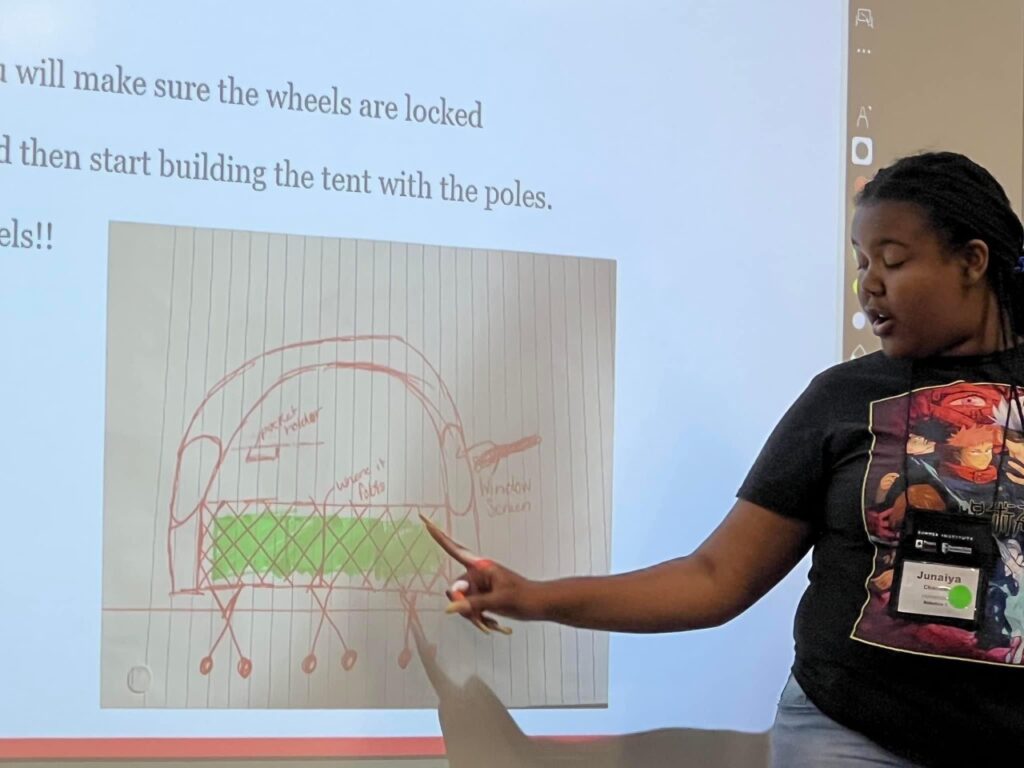
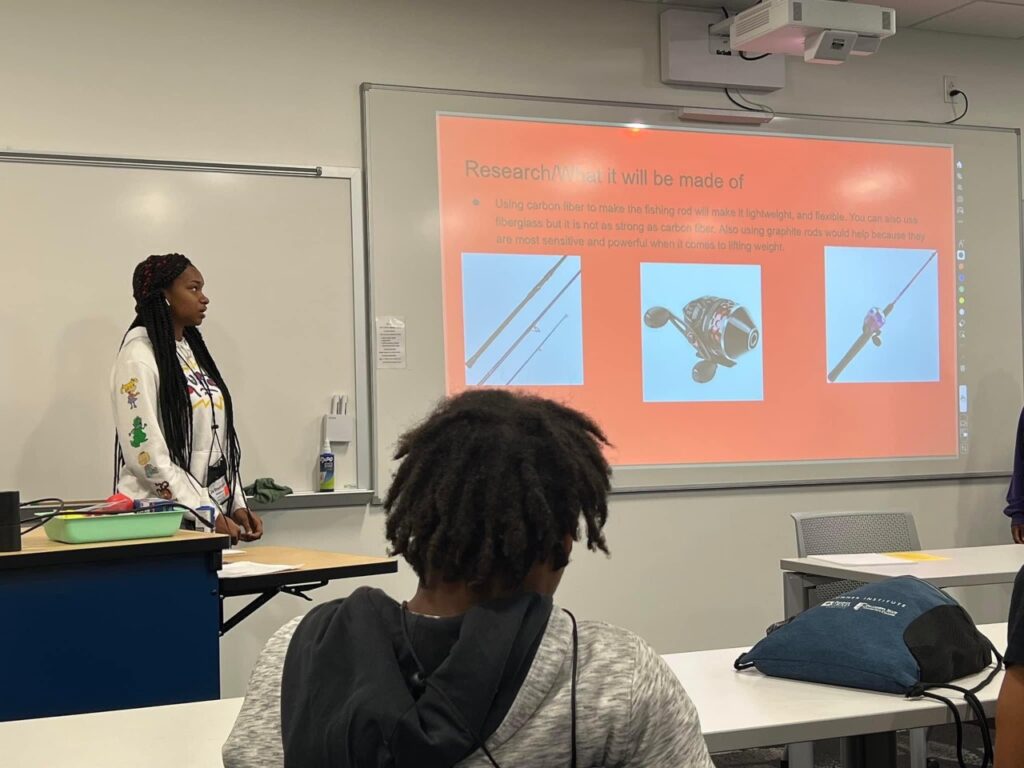
They are not the only ones to consider how composites can be used in sports. Austin East High School’s Kenzie and Ja’Doriauna have designed a fishing pole made of composites to help people who may have lost control of their fine motor skills. With a button to cast the line and a button to reel it in, they feel this fishing pole could help elderly individuals and those with disabilities. The girls are designing a pole made of graphite since their research showed that this material was good for lifting weight. “For me personally, I can’t reel in a huge fish because then I snap the line. If you swap that for electronic strength, it will be more efficient,” says Ja’Doriauna.
The students from Project GRAD have no shortage of ideas on how to expand the composites industry into everyday lives. They’ve all found a way to connect the field of engineering to their personal lives by identifying a problem they wanted to solve. Perhaps their next class will be learning to machine their products.
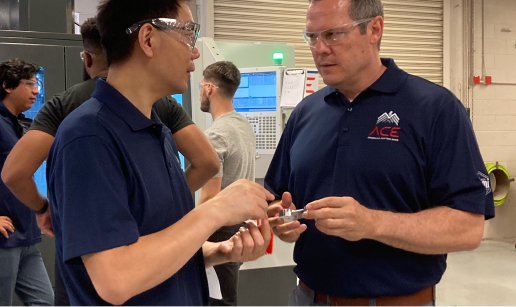
N.C. A&T professors Dr. Aixi Zhou, Phill Davis, James Kribs, Xiaochuan “Frank” Lu, and Alexander Martin have traveled from Greensboro, NC, to Knoxville, Tenn., to spend five days in the ACE in-person training course for Computer Numerical Control (CNC) skills and have gained the knowledge necessary to expand the ACE curriculum at their university. N.C. A&T has become the first ACE regional machine tools workforce training and development center beyond the initial testbed in East Tennessee and is the largest HBCU, Historically Black College and University, in the country. ACE is supported by the U.S. Department of Defense (DoD) and managed by the Institute for Advanced Composites Manufacturing Innovation (IACMI), but how is the program scaling up? This week is the first opportunity for the program’s developer, Dr. Tony Schmitz, to share his knowledge directly through a “train-the-trainer” model.
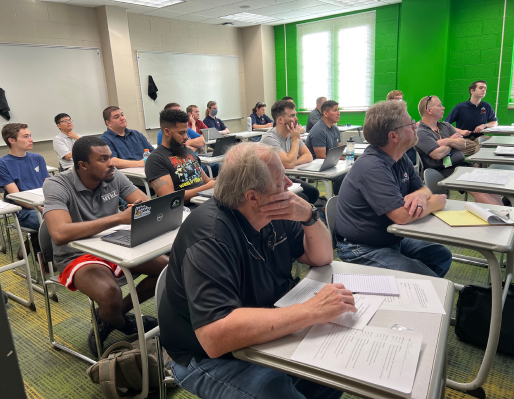
“I’m so excited to have N.C. A&T here,” says Schmitz, a mechanical engineering professor at the University of Tennessee. “It’s already such a strong engineering program, serving a community that is traditionally under-represented, particularly in manufacturing. And so, the opportunity to push this training onto that campus and into their network is going to change North Carolina’s manufacturing ecosystem but also grow what we’re able to do here in Tennessee.”
Zhou, chair and professor in the Department of Applied Engineering Technology at N.C. A&T, is serving as director of the new hub and is excited about the potential impact of ACE. “Industry demand for machine tool operators, engineers, designers, and entrepreneurs far outpaces our manufacturing workforce supply in the U.S.,” says Zhou, “At North Carolina A&T, we are leveraging this opportunity with America’s Cutting Edge to better serve our students and community.” Assistant Professor Alexander Martin agrees. “Companies come to N.C. A&T to help train their operators,” he says. “We want our graduates to have the knowledge and capability to perform to a company’s expectations.”
The 30-hour in-person bootcamps are being hosted this summer in Knoxville by both the University of Tennessee and Pellissippi State Community College. Participants design and machine four components of an oscillating piston air engine, while observers are given the necessary tools and guidance on how to teach the course as they go. ACE teaches both the design and cutting aspects of machining, skills traditionally taught separately. Assistant Professor James Kribs prefers this approach and likes how hands-on the ACE program is. He says, “Whether you’re an experienced machinist or newcomer, you can step in and be a part of the CNC machining learning. Our students are going to learn a lot.”
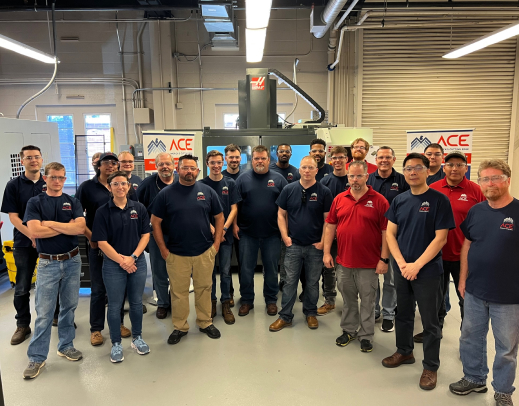
All the N.C. A&T instructors are impressed with how ACE appeals to people of multiple ages, backgrounds, and interests. From blue-collar machinists to graduate researchers, from entrepreneurs to high school students, Davis feels there’s something for everyone. “We’re discussing how we can take this program to high school teachers and students,” says Davis. “I know a lot of these robotics kids who come in during the summer could really benefit from it. There are so many possibilities.” Martin wants to reach the kids who love to build and make things, like he did not so long ago. “My childhood was LEGOs and train sets; building components that move comes naturally to me.” If high schoolers with this similar experience attend an ACE bootcamp, they will have the ability to explore making things on a whole new level.
Associate Professor Xiaochuan “Frank” Lu appreciates all the tools and guidance given this week because scaling up the ACE model is not a simple task. “This takes a lot of research,” says Lu. “From the machines to the parts, there are all kinds of elements that must be managed.” Kribs agrees that communication is important, but he also points out the preparation. He says, “By having all of the work for students prepared, having the pre-cut parts and pre-cut stock, it segues from the classroom to the lab perfectly.” Zhou emphasizes the importance of all the parts of the program by adding, “I think this is a good place for people to see what modern manufacturing looks like with digital programs, robotics, research, everything.”
Tony Schmitz says he can’t wait for N.C. A&T to start holding ACE training this fall. He applauds the university for supporting the training necessary to bring machine tool prominence back to the U.S. and bolster our nation’s machine tool workforce to help DoD meet its supply chain needs. “U.S. manufacturing is ready for a new renaissance, not because we don’t have capabilities here but because we can grow those capabilities substantially and regain a position internationally as a leader in manufacturing.”